Osmo Pocket Series
Every Moment, Cinematic
Compare the features and combos of Osmo Pocket 4P, Osmo Pocket 4, and Osmo Pocket 3 to pick the one for your next story.



|
How do I choose between a pocket gimbal camera and a regular camera?
Choose a pocket gimbal camera for videos, or a regular camera for static photos. The Osmo Pocket series features a built-in 3-axis mechanical gimbal for steady footage on the move. It also features clear audio recording, subject tracking, and a rotatable screen for quick switches between horizontal and vertical framing. If you just take photos, the advantages of a gimbal camera aren't as noticeable.
What is the Osmo Pocket lineup, and which one is right for me?
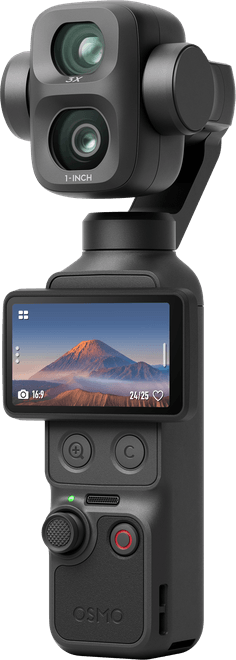
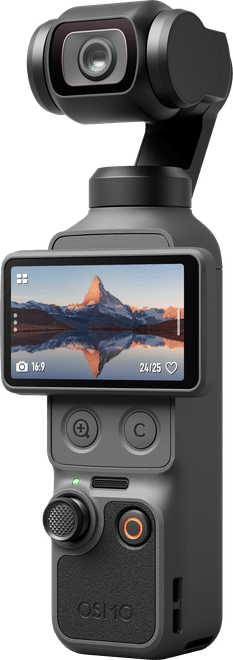
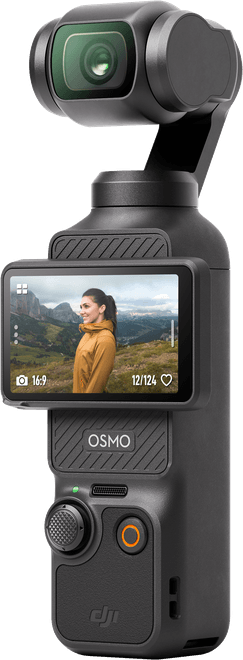
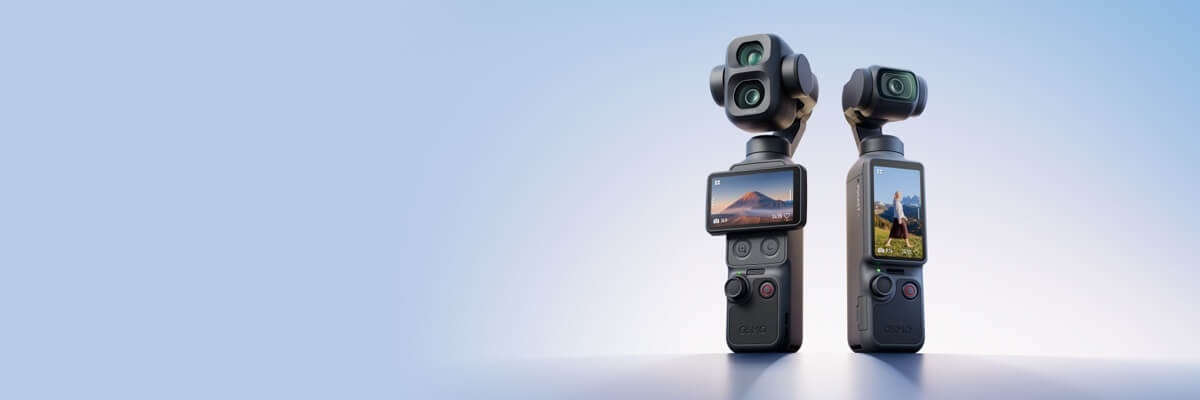
There are three models available right now: Osmo Pocket 4P, Osmo Pocket 4, and Osmo Pocket 3. They all feature a 3-axis mechanical gimbal and a 2-inch rotatable screen. If you want portrait close-ups and cinematic video, go with the dual-lens Osmo Pocket 4P. For daily vlogs and travel, pick Osmo Pocket 4, which offers a 1-inch CMOS and 107 GB of built-in storage. If you want the lightest setup, the 179g Osmo Pocket 3 is a great choice for beginners.
What is the difference between Osmo Pocket 4P and Osmo Pocket 4?
Osmo Pocket 4P uses a dual-lens design (20mm and 60mm) to easily cover landscapes and portrait close-ups. It adds 17-stop dynamic range and D-Log 2, making it ideal for stage events and distant details. Osmo Pocket 4 uses a single 20mm 1-inch sensor in a lighter body. It includes 14-stop dynamic range, 4K/240fps, and 107 GB of built-in storage. If you focus on travel and daily vlogs, it is an ideal choice.
What is the difference between Osmo Pocket 4 and Osmo Pocket 3?
Both cameras share a 1-inch CMOS, a 20mm f/2.0 lens, and 4K/60fps standard video. The main differences lie in storage, slow motion, and low-light performance. Osmo Pocket 4 features 107 GB of built-in storage (so you can record without a memory card), 4K/240fps slow motion, a max ISO of 25,600 for low light, and a 1000-nit screen. Osmo Pocket 3 requires a microSD card, goes up to 4K/120fps for slow motion, and uses a 700-nit screen. If you primarily record daily videos and rarely need heavy slow motion or night scenes, Osmo Pocket 3 remains highly capable.
What are the practical uses of the Osmo Pocket 4P dual-lens system?
Osmo Pocket 4P is equipped with a wide-angle camera and a med-tele camera. The wide-angle camera (1-inch CMOS, 20mm equivalent, f/2.0) has a minimum focus distance of 0.09 m, while the med-tele camera (1/1.28-inch CMOS, 60mm equivalent, f/1.8) has a minimum focus distance of 0.2 m. The wide-angle camera is ideal for landscapes, vlogs, and group shots. The 60mm med-tele camera is perfect for portraits and capturing distant details, with the f/1.8 aperture providing a more natural background blur. You can switch smoothly between the two lenses while shooting. Osmo Pocket 4P weighs 230 g, slightly heavier than Osmo Pocket 4 (190.5 g).
Which Osmo Pocket has the longest battery life and how long can it record?
Under official test conditions, Osmo Pocket 4 has the longest operating time at approximately 240 minutes. Osmo Pocket 4P lasts about 210 minutes, and Osmo Pocket 3 lasts about 166 minutes. Actual battery life will vary depending on resolution, frame rate, screen brightness, Wi-Fi usage, tracking, and accessory use. All three models support a Battery Handle for long-duration travel or event recording. Battery Handle recommendation: If you need longer standby and recording time, consider adding the Battery Handle. It significantly extends the shooting time per outing, making it ideal for long trips and event coverage.
Can I start shooting without a microSD card?
Yes, but only with Osmo Pocket 4 and Osmo Pocket 4P. Osmo Pocket 4 has 107 GB of built-in storage, and Osmo Pocket 4P has 103GB. Both can be expanded with a microSD card (up to 1 TB). Osmo Pocket 3 has no internal storage and requires a microSD card to record video.
Does Osmo Pocket need to be connected to a smartphone to shoot?
Osmo Pocket 4P, Osmo Pocket 4, and Osmo Pocket 3 all require activation via the DJI Mimo app for first-time use. Once activated, the camera can be used independently. A smartphone is primarily used for remote framing, file transfer, editing, settings, and firmware updates.
Does Osmo Pocket support vertical shooting and is it suitable for Instagram Reels or YouTube Shorts?
Yes. Osmo Pocket 4P, Osmo Pocket 4, and Osmo Pocket 3 all support vertical shooting. You can quickly switch between horizontal and vertical compositions by rotating the screen, making them ideal for vlogs and short-form social media content.
What is the difference between recording vlogs with a pocket gimbal camera and a smartphone?
Phones are convenient for quick sharing, but recording video ties up your device and handheld footage can easily get shaky on the move. A pocket gimbal camera solves this. It packs a 3-axis mechanical gimbal for steady video on the move. It supports subject tracking and includes a rotatable screen for quick switches between horizontal and vertical framing. Your phone is fine for basic photos, but for travel vlogs and solo videos, a gimbal camera is the better choice.
How does a 1-inch sensor benefit vlogging?
A 1-inch CMOS captures more light, helping to preserve detail and reduce noise in indoor, night, or backlit environments. Combined with a large aperture and professional color modes, it provides more flexibility for color grading and creates better depth for portraits. Actual image quality is also influenced by the lens, settings, stabilization, and ambient light.