Made to Spark Creativity
Osmo Pocket Series
Every Moment, Cinematic
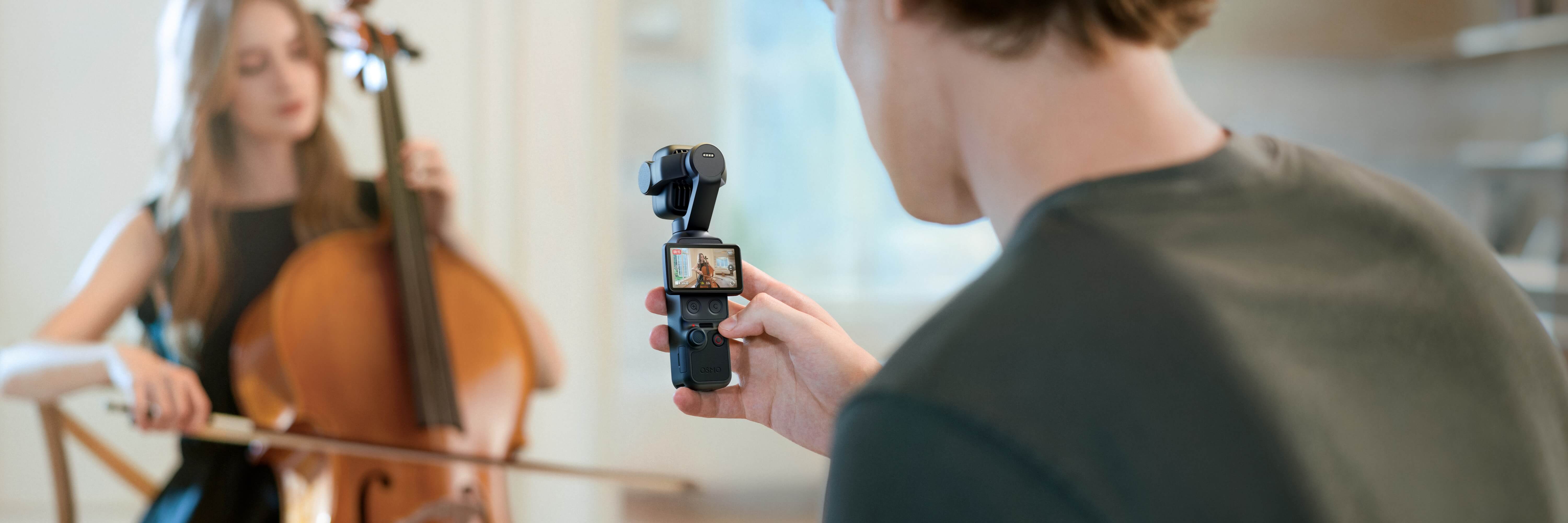
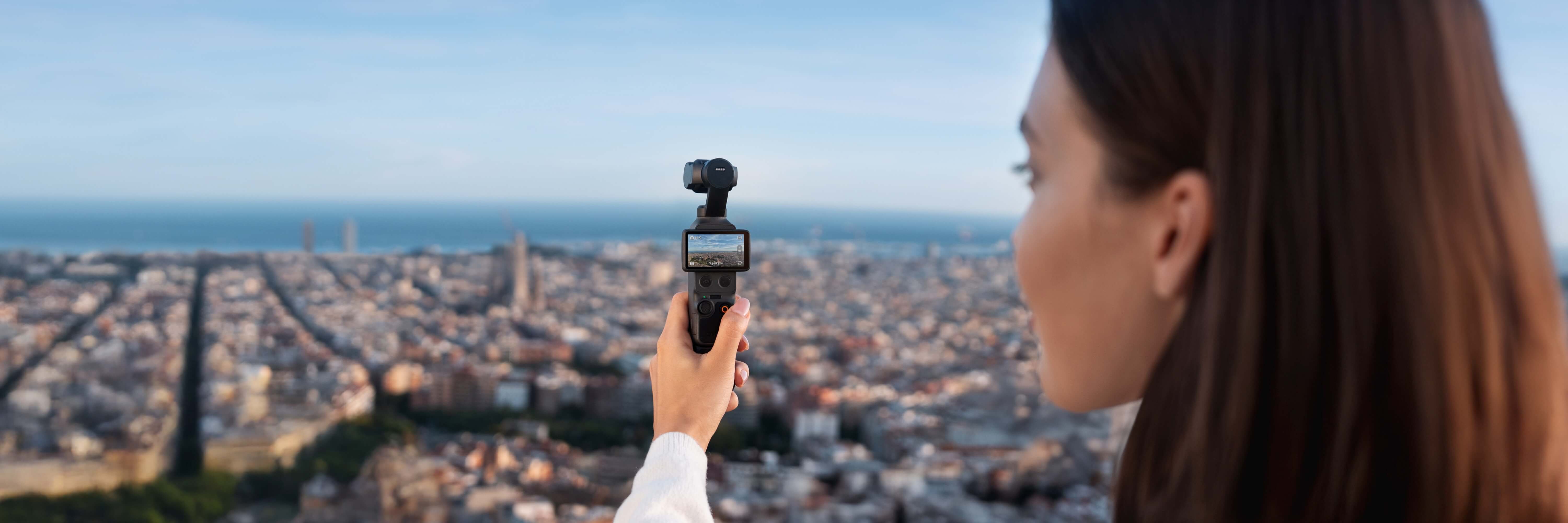


Which DJI Osmo Pocket camera is best for vlogging?
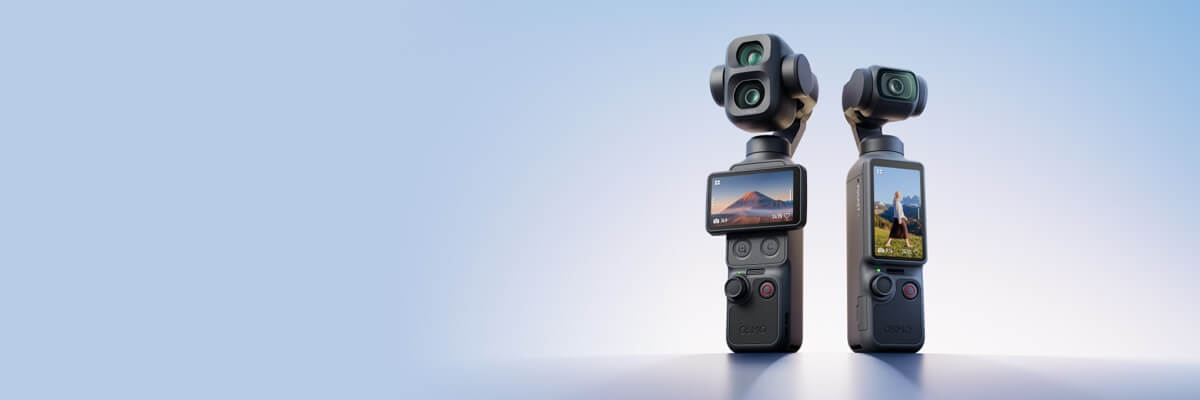
Osmo Pocket 4P features wide-angle and medium-telephoto cameras, giving you more framing options for vlogs, portraits, and distant subjects.
Osmo Pocket 4 is great for 4K video, night shots, and everyday content creation.
Osmo Pocket 3 remains a compact and accessible option for travel and daily filming.
What are the main differences between Osmo Pocket 4P and Osmo Pocket 4?
Osmo Pocket 4P upgrades to a dual-camera system with enhanced zoom capabilities. Key differences include:
1. Wide-angle camera with 1-inch CMOS
The wide-angle camera now features a new 1-inch stacked CMOS sensor. Powered by LOFIC technology, it delivers up to 17 stops of dynamic range, preserving highlight and shadow details in high-contrast scenes. It also supports the new D-Log 2 color profile for greater flexibility in post-production.
2. New 60mm f/1.8 med-tele camera
With a 1/1.28-inch sensor, 60mm equivalent focal length, and f/1.8 aperture, this camera delivers a bokeh effect equivalent to approximately f/6.3 on a full-frame camera. It provides natural background blur and minimizes facial distortion for better portraits.
3. More versatile focal lengths
Use the 1× (20mm) wide-angle camera for selfie vlogs and group shots, or switch to the 3× (60mm) med-tele camera for portraits with natural bokeh. For distant subjects—like stages or street photography—you can zoom to 6× and above to capture details clearly without moving closer.
4. Enhanced zoom capability
Photo zoom increases from 2× to 9×, while video zoom increases from 4× to 12×.
What are the main differences between Osmo Pocket 4 and Osmo Pocket 3?
Key upgrades on Osmo Pocket 4 include:
1. Upgraded imaging quality
The new 1-inch CMOS sensor supports up to 4K/240fps recording, clean night shots, 14 stops of dynamic range and 10-bit D-Log color profile.
2. Smarter subject tracking
ActiveTrack 7.0 supports tracking at up to 4× zoom and can lock onto a variety of subjects, including people, cars, motorcycles, cats, dogs, and stationary objects.
3. Gesture control and autofocus
Gesture Control makes it easier to start recording, take photos, and activate ActiveTrack during solo filming. Intelligent Autofocus also helps keep selected subjects sharp.
4. More efficient operation
Two physical buttons, 107GB of built-in storage, Wi-Fi 6, and high-speed USB-C transfer make shooting and file management faster and easier.
What are the functions of the two physical buttons on Osmo Pocket 4P?
The two physical buttons under the touchscreen are designed to deliver a more efficient control experience:
Zoom Button (Left):
Press once to switch to 3× zoom (if currently at 1×), or return to 1× (from any other zoom level).
Press twice to switch to 6× zoom.
Press and hold to smoothly zoom in at a constant speed (zoom speed can be adjusted in the Settings).
Custom Button (Right):
Press and hold to smoothly zoom out at a constant speed (zoom speed can be adjusted in the Settings).
Custom settings: Swipe down to access the menu and map specific features to a single, double, or triple press. Available options include: Switch Gimbal Mode, Photo/Video, Quick Capture, Switch C1/C2, C1 Quick Capture, Rotate Gimbal, Recenter Gimbal, Enable/Disable Gimbal Lock, Enable/Disable Fill Light, Follow/FPV, and so on.
How many lenses does Osmo Pocket 4P have, and what are their functions?
Osmo Pocket 4P features a dual-camera system with a wide-angle lens and a med-tele lens, covering popular focal lengths to meet diverse shooting needs. You can switch between the two lenses while shooting for flexible zoom.
Wide-angle lens: Features a 1-inch CMOS sensor, a 20mm equivalent focal length, an f/2.0 aperture, and a focus range from 0.09 m to infinity. Ideal for wide-angle shots like landscapes, daily vlogs, and group photos.
Med-tele lens: Features a 1/1.28-inch CMOS sensor, a 60mm equivalent focal length, an f/1.8 aperture, and a focus range from 0.2 m to infinity. Ideal for portrait close-ups and distant details. Its f/1.8 aperture creates natural bokeh that helps your subject stand out.